Home
Thesis
Background
R'sInsulin's impact on humanityConclusionResearch
Frederick Banting and John Macleod, University of Toronto.
Revolution, Reaction, and Reform
________________________________
How did insulin revolutionize diabetic treatment?
Diabetic treatment was revolutionized as the discovery of insulin spread like a wildfire to various countries, because insulin instantly reversed the effects of diabetes, which include severe weight loss and ketoacidosis. In 1922, the researchers acquired a Nobel Prize for their ground-breaking discovery. By October 15, 1923, Eli Lilly started mass-producing insulin for commercial use. In 1936, Novo Nordisk Pharmaceuticals formulated an assortment of slower-acting versions of insulin. The hormone was manufactured by numerous companies in swift succession to contend with the increased demand for diabetic patients, yet repeated allergic reactions from patients compelled researchers to extract insulin from E. coli bacteria with genetic engineering, lysis, and advanced chromatography. Eli Lilly marketed it in 1982 as a commercially available biosynthetic insulin called Humulin. These breakthroughs in genetic engineering essentially enhanced diabetic treatment as the E. coli-extracted insulin resolved most of the limitations of pancreas-derived insulin.
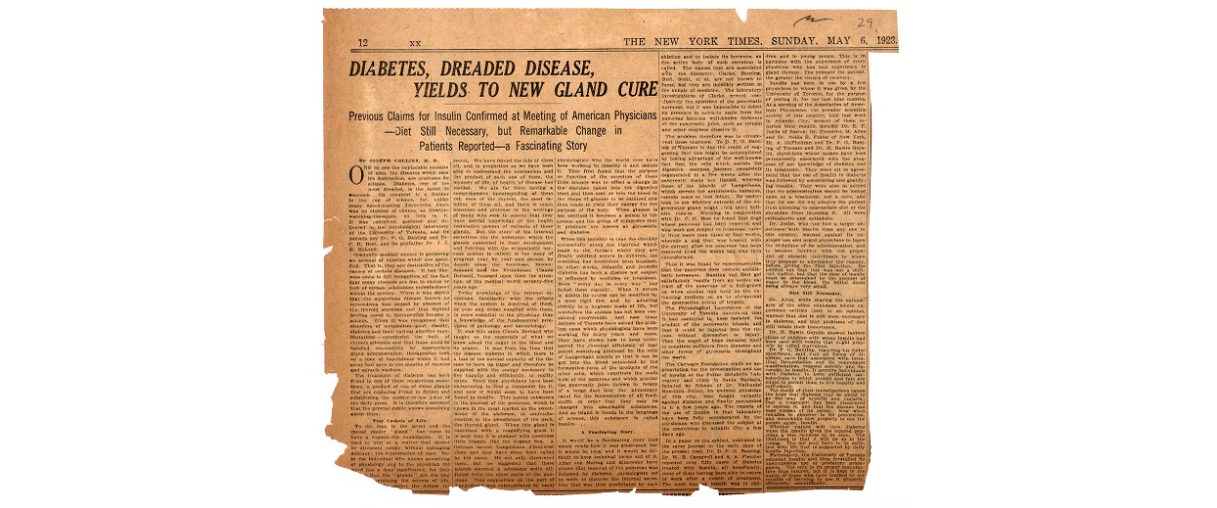
Diabetes disease yields a new cure, New York Times.
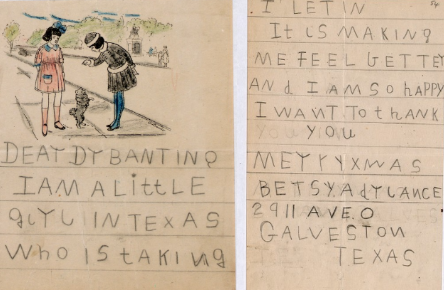
"Child's letter to Dr. Banting" Picture is a letter printed in pencil and signed by Betsy. Writes from Galveston, Texas to thank F. G. Banting for Iletin.
What were the various reactions to insulin?
The public harbored eclectic reactions to the discovery of insulin. Some acclaimed insulin a miracle as it brought their bedridden relatives back to life. While physicians were skeptical, there was no universal dosage for an individual. The distinctions in people's insulin sensitivity made it problematic to give the proper dosage to diabetic patients. In addition to the varying insulin dosage, this experimental hormone had severe allergic reactions due to impurities that were taken from the calf and piglet pancreases. But medical professionals acclimated to insulin, as successful trials and evolving variants solved most of the previous versions' restraints. Skeptical reactions from medical professionals delayed the acceptance of the hormone. As “The production of insulin originated in a wrongly conceived, wrongly conducted, and wrongly interpreted series of experiments” (Roberts, 1922). Ffrangcon Roberts was one of the many professionals who expressed reluctance towards insulin. This obliged researchers to produce different strains of the hormone until a pure version had been created, solving the previous limitations of supply, immunogenicity, and purity. These advancements in the hormone allowed different professionals to change their ideology about insulin.
How did insulin reform medicine?
The discovery of insulin reformed the treatment of diabetes. Before insulin, a diagnosis of diabetes was equivalent to a death sentence. Diabetic treatments ranged from bloodletting and opium administration to intense caloric limitations which increased the patients' lifespan by months. Patients frequently suffered from severe emaciation and infection due to dietary restrictions. But insulin altered this situation by targeting the cause of the disease: insufficient insulin production by the pancreas. As a result, insulin restored the body’s ability to regulate glucose levels, allowing ill patients to live typical lives. This hormone was available worldwide, as the researchers placed the value of their patent at one Canadian dollar, making it available to most people. This decision valued patients over pharmaceutical profits. Insulin permanently reformed medicine by implementing medicinal accessibility rights, Banting influenced pharmaceutical companies and their distribution of medicine, stating “Insulin does not belong to me, it belongs to the world” (Banting, 1923). The first countries that accessed insulin consisted of Canada, the United States, the United Kingdom, Denmark, and Spain.
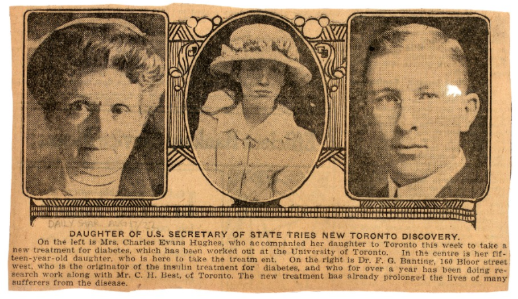
"Daughter of U. S. Secretary of State tries new Toronto discovery" Toronto Daily Star