Home
Thesis
Background
R'sInsulin's impact on humanityConclusionResearch
"Photograph of the Banting Institute" University of Toronto.
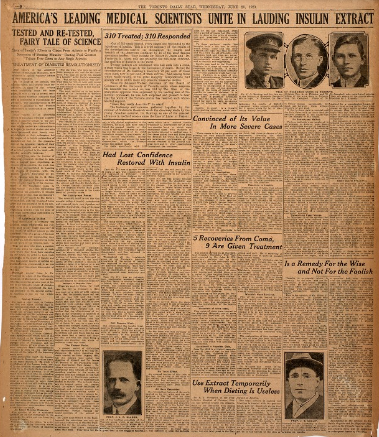
Medical scientists unite in lauding insulin extract. Rare Book Library
Short-Term Effects
Before 1924, there were a multitude of effects associated with the discovery of insulin. A vast number of patients were relieved, as insulin immediately reversed the effects of diabetes, saving millions of patients' lives by reducing glucose levels within 24 hours of administration. Insulin also reduced children's diabetic mortality rates from 82.4% to 0.25%, reforming the ideology of the incurable disease into a treatable chronic disease. Physicians and other medical professionals identified that impure pancreatic extract directly correlated to severe allergic reactions and could cause hypoglycemia if overdosed. Despite major drawbacks these immediate effects establish how insulin impacted humanity.
Historica Canada, "Heritage Minutes: The Discovery of Insulin"
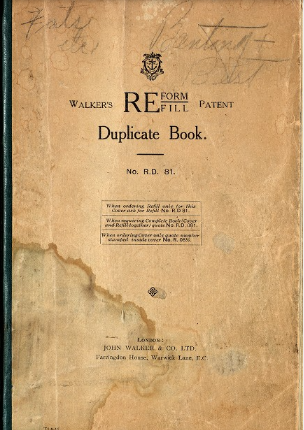
Walker's Re-form/fill Patent Duplicate Book with perforated leaves, intended to be completed in manuscript.
Endocrinolgic research and modern impact
This led to an open opportunity in the endocrinology field. Insulin’s success effectively proved the doctrine; insufficient insulin can be supplemented with external injections of insulin to balance out the insufficiency. This sparked the idea that hormones could be isolated and extracted, leading to the extraction of Thyroxine, Cortisol, and Growth hormone. Through specialized tests, scientists can identify a deficiency of growth hormone, and with subcutaneous injections, ordinary stature can be attained. This also led to glucose monitors, which monitored blood sugar and administered medication when needed. The development of other hormonal treatments permanently affected modern medicine, branching the significance of insulin beyond diabetes by verifying that deficient hormones can be supplemented to a normal status. Shattering the barrier of hormonal research, and revolutionizing future medical industries